Saturday, 15 May 2021

Katrin Bremermann / Constantin Brancusi


Constantin Brancusi

wooden sculpture

1920


I have a lot heroes and inspiration is to be found everywhere. One of them is Constantin Brancusi: "Simplicity Is Complexity Resolved''. It’s about finding the solution that is perfectly natural and true. It appears to be so simple that anybody could do it. This inspiration is an encouragement that keeps me moving forward.


Katrin Bremermann, 2021


Katrin Bremermann

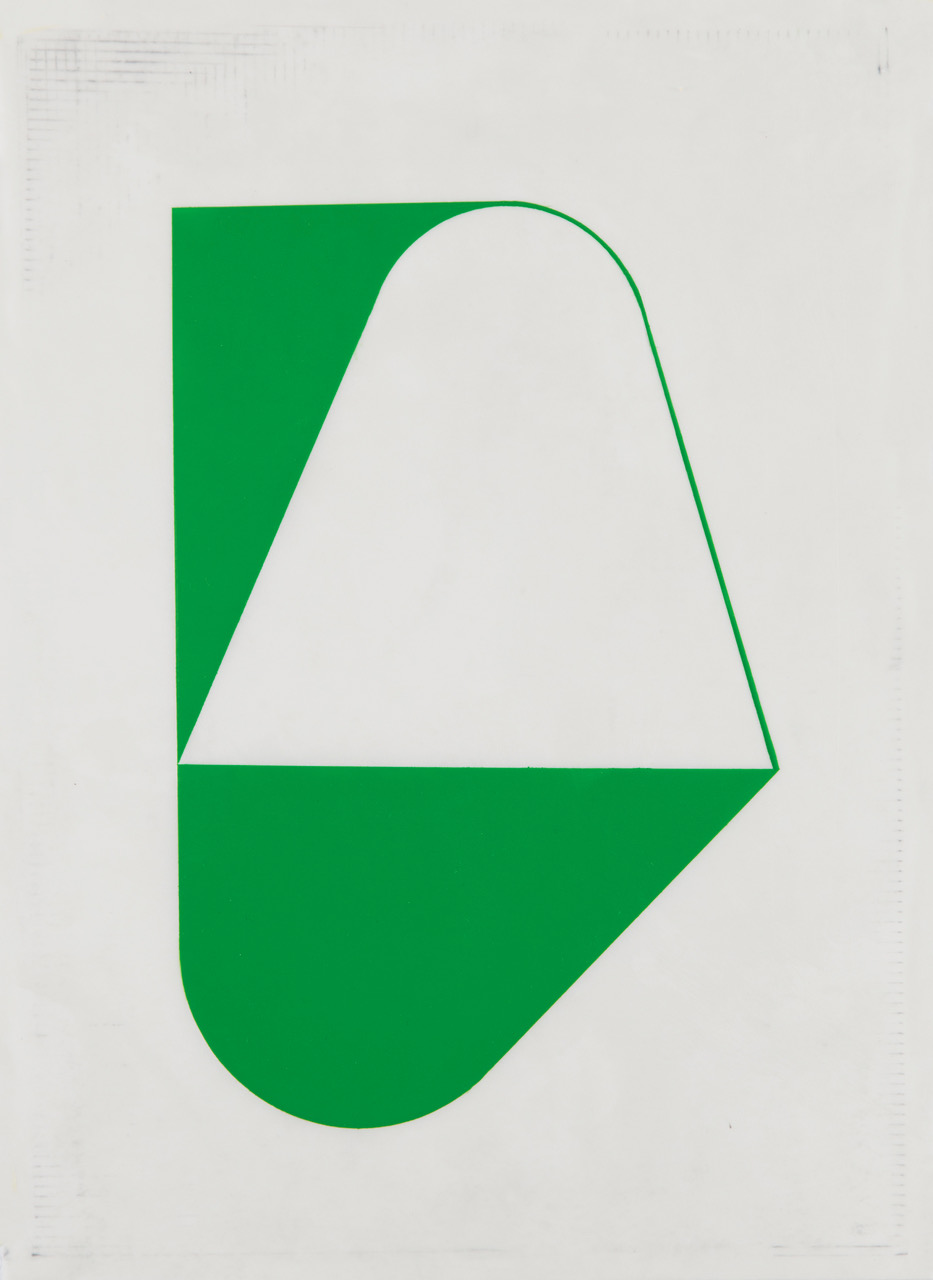
No; 2041

2020

40,5 x 29,7 cm

enamel on waxed paper


Katrin Bremermann (DE/FR)

studio shot wax drawings

2019

http://katrinbremermann.com

rk


Sunday, 25 April 2021

Daniël Peetermans / Robert Rauschenberg


Robert Rauschenberg

Collection

1954/1955

fabric, metal, oil, paper and wood on canvas

203,2 x 243,8 x 8,89 cm

collection SF MOMA


Robert Rauschenberg

Bed

1955

oil and pencil on pillow, quilt and wood supports

191,1 x 80 x 20,3 cm

collection SF MOMA


When I saw the work of Robert Rauschenberg in my student years (1980) I was very touched by the fresh colors, unusual materials he used and the free way of painting.

I still think his work and his ideas about painting  are topical.


I’ve always been a big fan of Robert Rauschenberg and that undoubtedly influenced me strongly in the use of colors. How I paint is influenced by graphic design through my education.


Daniël Peetermans, 2021


Daniël Peetermans 

What is behind Yellow?

2021

oil on canvas

30 x 40 cm


Daniël Peetermans (BE)

Blue under construction

2021

oil, acrylics, spray paint on multiplex

20 x 26 cm

www.instagram.com/daniel.peetermans

rk


Saturday, 10 April 2021

Anook Cléonne / Fernando Pessoa


Fernando Pessoa


In 1991 I exchanged my small home village in Twente for Amsterdam. From this moment on the magnitude of things was solely defined by my hunger for the arts instead of by dogmas of religious zealots. I proved insatiable for all new perspectives the world of art created!


Yet, although I loved every angle of it, I also remained aloof. As if I couldn't climb my own threshold. My niece, just graduated from Willem de Kooning in Rotterdam and sharing a similar religious background, gave me Fernando Pessoa's 'The Book of Disquiet' (Boek der Rusteloosheid).


Pessoa turned out to be a stepping stone. His words gave me a map and a compass and showed the connection between what I saw and how I thought about it. Up to this day, his book functions as a travel companion. Not one week passes without me leafing through it and loosing myself in one of his many poems.


Fernando Pessoa is a poet able of grasping the impotence in man's existence and the impossibility of making sense of it in a single sentence, but at the same time he does this with a tremendous zest for life and a fearlessness that, to me, is precisely spot on. How to be human is the question and the quest that, unconsciously at one time, yet way more consciously nowadays, forms the basis of my work.


"All I am is nothing more than a ravine 

In which a dim light 

through which I know I am, without appearances, 

directs me darkly. 


Something in between being and non-being 

and inhabited by me, 

like the dust that rises in the wind

lives only when it shows it."


The Book of Disquiet


Pessoa guided me into the act of actively not knowing. In doing so he defined my necessity as a maker profoundly. My drawings start off exactly where my knowing or understanding ceases. Pessoa shows me in his many wanderings, being the keen observer and the pessimist that he was, the fabulous magic of everyday life.


"It would be more correct to say that a state of the soul is a landscape; that sentence is better in that it does not contain the lie of a theory, but only the truth of a metaphor…”


The Book of Disquiet


His choice to speak as different characters also inspired me.

Pessoa wrote many of his works as heteronyms; different characters who worked independently and used different forms and languages. Pessoa disintegrated on his paper, and his strength stemmed from this disintegration. 


In this fragmentation of his identity I found the space to investigate completely different styles. Why must everything be reduced to one hand of drawing? 


In the past year, a period connotating and denoting my accordance and relation to global prowess regarding Covid19, Pessoa pushed me to go and try something completely new. Since the start of the crisis, I have been drawing a small observation every day and unworrying whether it fits into the rest of my oeuvre. Every day my hand acts like a seismograph of my mood. Just like Pessoa acted after his daily wanderings through the city throughout all seasons. His writings a gauge of an inner heartbeat and necessity.


To observe and to render a picture of what this time does to me and us. Little visual notes, Consolation Pieces, which I “give back to the world on social media every day” was something he certainly helped overcome my own barriers.


Pessoa showed in prose and poetry an ontology of our fragmented existence and at the same time he knew the fragility of the individual and the impossibility to make sense of his role in that existence.


In an almost schizophrenic way, he succeeds in getting you to really crawl inside an experience through language and at the same time he allows you to look at it from a distance. Pessoa shows us metaphysics that go beyond the framework of thought and, with all heteronyms, holds up a mirror in which we see something different than our own reflection.


The unruliness and contradiction in his language and the images he evokes in the process, stirs up an enormous necessity to create for me. Again and again.


“The main thing is knowing how to see,

To know how to see without thinking,

To know how to see when you see,

And not think when you see

Or see when you think.” 


Alberto Caeiro, The Keeper of Sheep


Anook Cléonne, 2021


Anook Cléonne

Tableau de la troupe

300 x 150 cm

pastel on paper


Anook Cléonne

The announcement

215 x 125 cm

pastel on paper


Anook Cléonne (NL)

Consolation Piece 302

33,1 x 24 cm

14.02.2021

mixed media on paper

www.anookcleonne.nl

rk


Saturday, 27 March 2021

Henri Wagner / Arshile Gorky


Arshile Gorky

The black Monk 

1948

oil on canvas 

78,6 x 101,5 cm

Museo Nacional Thyssen-Bornemisza, Madrid


Arshile Gorky is an American painter of Armenian origin. This painter is affiliated with the abstract expressionist movement. This painting, "The black Monk" is probably his last work. He committed suicide in 1948 and this painting is found on his easel. It is probably inspired by the short story by Chekov of the same name.


What particularly touches me, apart from the strength of the composition, is the feeling of urgency which emerges from it. The 'radicalism' in painting is generally something that interests me and sometimes inspires me. Apart from its intriguing story this painting stays well while getting older. For me this is one of the better pieces of Arshile Gorky.


Henri Wagner, 2021


Henri Wagner (FR)

Untitled

2019

acrylic & coating on wood panel

150 x 100 cm

https://www.instagram.com/henri.wagner_/

rk


Friday, 12 March 2021

Ben Sleeuwenhoek / Paul Thek


Paul Thek 

Untitled (humming top painted as a mushroom) 

1969

20 x 20 x 20 cm

tin with oil paint

collection Museum Boijmans van Beuningen, Rotterdam


Paul Thek believed in process, in life and art in flux.

His art is largely about the transposition of symbolic content.

When I was a young artist, in the early 1970s, I acquired his artist book A Document (a document made by Paul Thek and Edwin Klein, Amsterdam / Stockholm 1969). I still cherish it.

Although rarely seen I remained interested in his work.

Thek died in 1988.

It wasn’t until after 1995 that he became widely known through exhibitions and publications and I found more and more out that we (had) shared many themes.


Ben Sleeuwenhoek, 2021


Ben Sleeuwenhoek

Untitled 

2014

170 x 230 cm

oil on canvas with mirrors


Ben Sleeuwenhoek (NL/DE)

Bilderbuch 

page from a series of scrapbooks 

2018

38 x 26 cm

ink and collage 

www.instagram.com/bensleeuwenhoek

rk


Saturday, 27 February 2021

Ronny Delrue / Joseph Beuys


Joseph Beuys

Ohne Titel

1952

pencil

18,8 x 14,8 cm

signed and dated on reverse


Joseph Beuys

Waking Up Scared in the Night (Man in Grave)

1962

oil, gold paint, light writing paper

21,6 x 14,9 cm


When I was a student at the K.A.S.K. in Ghent, the confrontation with the work of Joseph Beuys was a revelation.

A stroll through Joseph Beuys’ multifaceted oeuvre made me think about his vision of life, his attitude as an artist, his sources of inspiration, art education, art, the art world, sculptures, drawings, etc.

The freedom of his drawings fascinated me: the image and the medium on which he worked. The registrations that he made on a blackboard – during his performances/lectures –  inspired me.

To me, diary entries are drawings of my thoughts. They form a breeding ground from which new images can emerge and grow. Like an archivist, they store my ideas. Like an archaeologist, I can go in search of frozen moments: reflections on my life and world events.


Ronny Delrue, 8.2.2021


Ronny Delrue

The Maharjan Caste

2019

fragments of photographs and tikkas

300 x 300 cm

collection S.M.A.K. Ghent


Ronny Delrue (BE)

Sculptures of stones, Monday 11.1.2021, 20:10

2021

mixed media on paper

42 x 29,7 cm

www.ronnydelrue.be

rk